









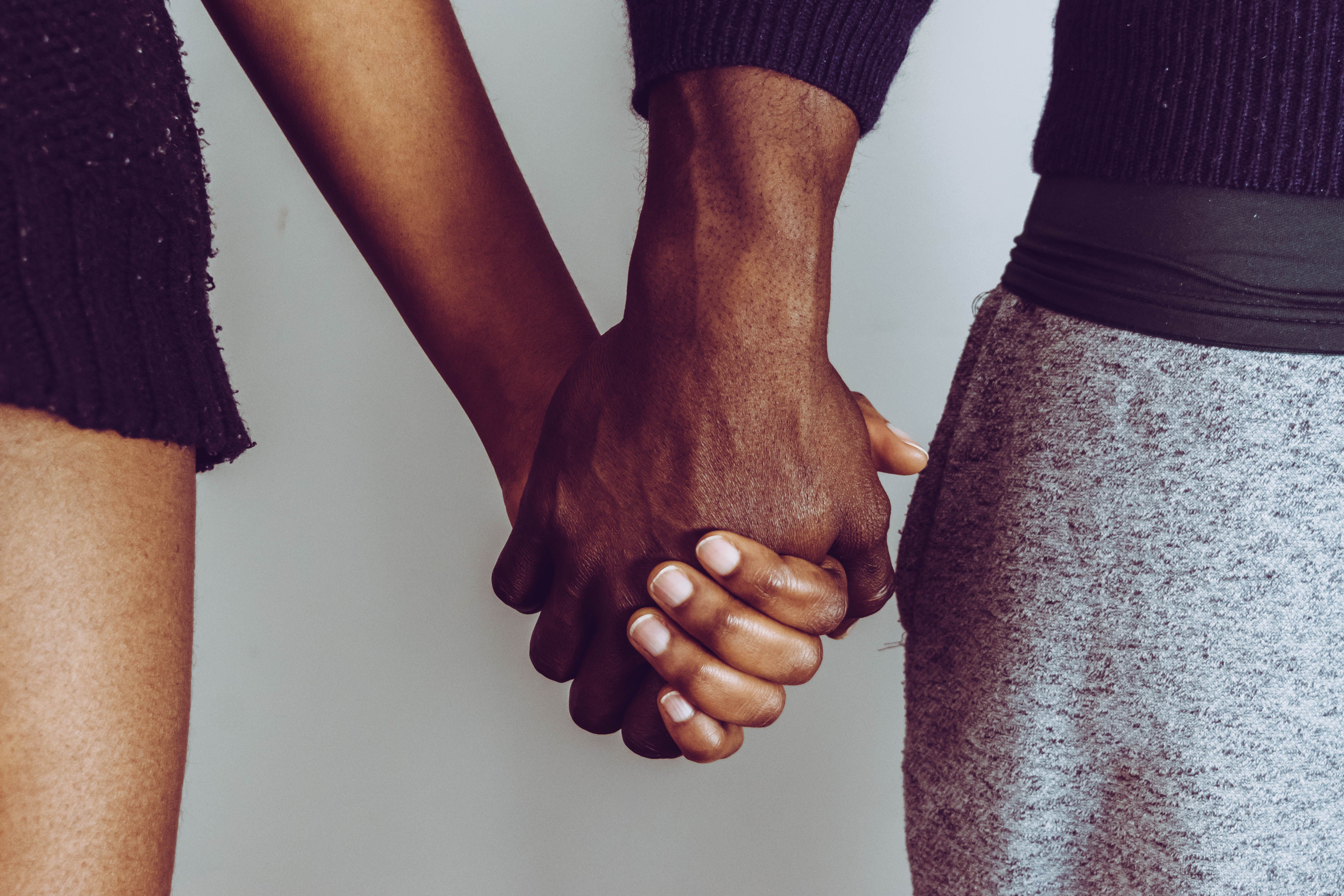
One moment, you're reaching across the table to hold your partner's hand. The next week, their touch makes you want to pull away. Or maybe you're the opposite: you notice your body physically relaxes when they put their arm around you, but the calm only lasts until they let go.
If the physical touch love language resonates with you, or confuses you, it's because your relationship with touch isn't about preference. It's your nervous system trying to either find safety or avoid danger.
Table of Contents
- What the Physical Touch Love Language Actually Means
- How Your Attachment Style Shapes Your Relationship with Touch
- Why You Might Crave Physical Touch, But It Never Feels Like Enough
- Why You Might Pull Away from Touch, Even When You Want It
- The Physical Touch Patterns That Signal Attachment Wounds
- How to Heal Your Relationship with Physical Touch
- How The Personal Development School Can Help
What the Physical Touch Love Language Actually Means
When Dr. Gary Chapman introduced the five love languages, he described physical touch as one of the primary ways people express and receive love. The concept seems straightforward: some people feel most connected through holding hands, hugging, cuddling, and other forms of physical affection.
But here's what most articles about the physical touch love language miss: the why behind your relationship with touch matters more than whether you like it or not.
I've noticed a pattern in my work: a person’s relationship with touch isn't only about what they prefer. It’s their nervous system trying to either find safety or avoid danger. One person reaches for their partner's hand because touch temporarily soothes the anxiety that they'll be abandoned. Another person pulls away from the same gesture because physical closeness triggers a fear of being trapped or betrayed.
The physical touch love language framework gives us useful vocabulary. Touch can absolutely communicate emotional connection and build intimacy in relationships. The research shows that non-sexual touch, like holding hands or gentle caresses, can reduce stress and create feelings of safety.
But when I look at physical touch through the lens of attachment theory, I see something deeper. Your craving for or aversion to touch isn't just preference. It's connected to how you learned to seek or avoid connection as a child.
How Your Attachment Style Shapes Your Relationship with Touch
Understanding the four attachment styles reveals why physical touch can feel so complicated. Your attachment style, formed in your earliest relationships, shapes how your nervous system responds to physical closeness.
Fearful Avoidant: The Hot-and-Cold Touch Pattern
If you're a Fearful Avoidant, physical touch probably feels both necessary and dangerous. I lived this for years before I understood what was happening.
One day, you're the person initiating all the physical affection. You want to be close, you reach for your partner, you feel safe when they're touching you. Then something shifts. Maybe they get too comfortable, or maybe the intimacy feels too real, and suddenly their touch makes your skin crawl. You need space. You pull away.
This is your nervous system responding to two core wounds that are both true at the same time: "I am unsafe" without connection, and "I will be betrayed" if I let someone get too close.
For many Fearful Avoidants, physical touch in childhood was paired with pain. Maybe a caregiver was affectionate sometimes and frightening other times. Maybe touch came with control or violation. Your nervous system learned that physical closeness could meet your need for comfort AND be the source of harm.
So now, when your partner touches you, your body is asking two questions at once: "Am I safe?" and "Am I in danger?" The answer depends on how activated you are in that moment. When you're feeling secure, touch feels good. When you're triggered, the same touch can feel suffocating or threatening.
Dismissive Avoidant: Touch as Engulfment
If you're a Dismissive Avoidant, you might notice you have a specific tolerance threshold for physical touch. A little feels okay, maybe even nice, but too much starts to feel like someone is taking space that belongs to you.
This often comes from the core wound "I am trapped" or "I am engulfed." If you grew up with caregivers who were intrusive or controlling, your nervous system learned to protect your autonomy by creating distance.
Physical touch can trigger this wound because it requires letting someone into your personal space. Even affectionate touch from a loving partner can feel like it's asking for something you don't have to give.
Here's what I've seen happen: You pull away from touch, and then you feel shame about it. There's often a second wound underneath: "I am defective" for not wanting what seems to come naturally to everyone else.
Anxious Preoccupied: Touch as Reassurance
If you're Anxious Preoccupied, physical touch probably feels like oxygen. When your partner is touching you, holding your hand, or sitting close, your nervous system calms down. You feel safe. You feel loved.
But here's the pattern I notice: it's never quite enough. You can be holding hands, and part of you is already worried about when they'll let go.
This comes from the core wound "I will be abandoned." Your nervous system learned early on that connection was inconsistent. Sometimes your caregivers were there, sometimes they weren't. So now, physical touch becomes proof that someone is still there. Still choosing you. Still not leaving.
The challenge is that touch can't actually heal the wound. You can receive all the physical affection in the world, and your nervous system will still be scanning for signs of abandonment. The reassurance lasts only as long as the touch does.
Secure Attachment: Flexible and Responsive Touch
If you have Secure Attachment, physical touch serves connection rather than wound management. You can give and receive touch based on what feels genuine in the moment, not based on what your nervous system needs to feel safe.
You can enjoy physical closeness without it becoming the primary way you regulate anxiety. You can also go without touch and remain grounded in the connection with your partner. Touch enhances your relationship, but it doesn't define whether you feel loved or safe.
| Attachment Style | Core Wound Driving Touch Patterns | How Touch Shows Up |
|---|---|---|
| Fearful Avoidant | "I am unsafe," "I will be betrayed" | Hot-and-cold: craving then pulling away |
| Dismissive Avoidant | "I am trapped/engulfed," "I am defective" | Limited tolerance; shame around aversion |
| Anxious Preoccupied | "I will be abandoned," "I am not good enough" | Constant seeking; never feels like enough |
| Secure Attachment | None active | Flexible, responsive, present |
Why You Might Crave Physical Touch, But It Never Feels Like Enough
Let me describe what might be happening inside you, and I want you to know there's nothing wrong with you for experiencing this.
You're with your partner, and they're not touching you. Maybe they're on their phone, reading a book, just existing in the same space but not physically connected to you. Your chest starts to tighten. You feel this pull to reach for them, to close the distance.
When they do touch you—when they put their arm around you or hold your hand—there's this wave of relief. Your nervous system settles. You can breathe again.
But it doesn't last. Five minutes later, ten minutes later, you're checking again. Are they still present? Is their touch genuine or obligatory? Are they about to pull away?
This is what anxious activation around physical touch looks like. And I want you to know: it's not neediness. It's not clinginess. It's your nervous system trying to regulate itself, the only way it knows how.
When you have the core wound "I will be abandoned," touch becomes evidence. Physical closeness means "they're still here." Distance means "they're leaving." Your nervous system treats physical space like an early warning system for emotional disconnection.
The challenge is that this creates a pattern that can't actually resolve the wound. Think about it: if touch is your proof of connection, then the absence of touch becomes proof of disconnection. So you need more and more reassurance to counteract the anxiety that builds whenever you're not physically close.
I've heard students describe this as feeling like they're "starving for touch." But what they're actually starving for is the sense of safety that their nervous system never fully internalized as a child. Touch provides temporary relief, but it doesn't address what core wounds actually mean.
Here's what it might sound like in your internal experience:
- "If they're not touching me, they must not want me."
- "I need them close to feel okay."
- "When they pull away, even for normal reasons, it feels like rejection."
This isn’t always about wanting physical affection; you might not realize that you use physical touch to try to manage the terror of being left alone. And that's a very different thing.
| Discover Your Love Language |
|---|
| Understanding your love language is the first step toward transformation. Take our free Love Language Quiz to identify your love language and receive personalized insights for your journey. |
Why You Might Pull Away from Touch, Even When You Want It
Now let me describe a different experience. Someone you love reaches for your hand, and your first impulse is to move it away. They lean in for a hug, and you stiffen. You can see the hurt on their face, and part of you feels terrible. You want to want their touch. But in the moment, it feels like too much.
Or maybe you're the Fearful Avoidant version: you initiated all the physical closeness. You wanted it. You pulled them in. And now that they're comfortable being affectionate with you, their touch makes you want to run.
This is what avoidant patterns around physical touch look like. Your nervous system registers touch as a threat to your safety, your autonomy, or your identity.
For Dismissive Avoidants, touch can trigger the core wound "I am trapped" or "I am engulfed." When someone touches you, especially in ways that feel invasive or presumptuous, your body responds as if they're taking something from you without permission. Even when the touch is loving and consensual, it can feel like an intrusion into the space you need to protect.
This often comes from childhood experiences where physical or emotional boundaries weren't respected. Maybe your caregivers were controlling. Maybe they demanded affection or closeness when you needed space. Your nervous system learned that letting people in meant losing yourself.
For Fearful Avoidants, the pattern is more complicated. Touch triggers both the wound "I am unsafe" (I need connection to feel okay) and "I will be betrayed" (getting close leads to pain). So you move toward touch when you're dysregulated and need soothing, and you move away from touch when intimacy starts to feel too real or too vulnerable.
What makes this so confusing, for you and for your partner, is that the same touch can feel completely different depending on your nervous system state. When you're calm and grounded, a hug feels nice. When you're activated, the exact same hug feels suffocating.
Here's the internal experience:
- "I love them, but I need them to stop touching me."
- "Why can't I just be normal about this?"
- "I wanted closeness, and now I can't stand it."
And here's what I need you to hear: pulling away from touch doesn't mean you're cold or broken or incapable of intimacy. It means your nervous system is trying to protect you from something that felt dangerous in your past.
The Physical Touch Patterns That Signal Attachment Wounds
Not all physical touch is the same. The way you engage with touch, and the way it shows up in your relationships, can tell you whether you're seeking genuine connection or trying to manage a wound.
When physical touch is being used to regulate attachment wounds rather than express genuine affection, it has a specific quality to it. An urgency. A compulsiveness. A transaction-like feeling.
Touch-seeking as wound management looks like needing physical contact to feel okay emotionally. If you can't settle your nervous system without your partner touching you, that's different from enjoying touch as one form of connection. The distinction is: Can you be okay without it?
Using touch to avoid emotional intimacy is a pattern I see often in Fearful Avoidants. You might initiate physical affection, sometimes even sexual intimacy, as a way to feel close without having to be emotionally vulnerable. Touch becomes a substitute for the scarier work of letting someone see you.
Withholding touch as control or punishment is the avoidant version of this dynamic. If you pull away from physical affection when you're upset as a way to communicate displeasure or create distance, that's your attachment system using touch withdrawal as a protective mechanism.
Here's what genuine, secure physical touch looks like: it's responsive to the moment. It doesn't carry the weight of proving anything or protecting against anything. You can give it and receive it without your nervous system going into activation.
When touch is being driven by wounds, you'll notice:
- You can't be present in the moment because you're already worried about it ending (anxious)
- You feel obligated rather than connected (avoidant)
- You want it desperately one day and can't stand it the next (fearful avoidant)
- You're using it to soothe anxiety that returns the moment the touch stops (anxious)
The good news? These patterns can change. You can develop a different relationship with physical touch, one that's based on genuine connection rather than wound management.
How to Heal Your Relationship with Physical Touch
Healing your relationship with physical touch is not about forcing yourself to accept more touch if you're avoidant, or learning to need less if you're anxious. Instead, it will look like addressing the nervous system responses and the core wounds that drive your patterns.
The work starts with recognizing when your response to touch comes from a wound versus a genuine preference. Ask yourself: Is this my nervous system trying to find safety or avoid danger? Or is this actually how I want to connect right now?
If you're anxiously attached and constantly seeking touch for reassurance, the healing isn't in getting more touch. It's in learning to regulate your nervous system without needing external proof that someone isn't leaving.
Here's a script you might try: "I notice I want them to touch me right now. Is this because I feel anxious and need reassurance? Or because I genuinely want physical closeness?" Just naming the distinction can help you separate wound activation from authentic desire.
If you're avoidantly attached and pull away from touch, the healing comes from understanding that the person touching you now is not the person who violated your boundaries in childhood. You can practice small doses of consensual touch while staying grounded, reminding yourself that you have autonomy, you can stop whenever you want, and letting someone in doesn't mean losing yourself.
A script for this: "I'm safe. This person respects my boundaries. I can receive this touch and still be myself."
For Fearful Avoidants navigating the hot-and-cold pattern, the work is recognizing when you're moving toward touch from a dysregulated place versus a genuinely connected place.
Through my own healing journey, I've learned that the goal isn't to become someone who always wants physical touch or someone who never needs it. The goal is to develop enough nervous system regulation that touch becomes a choice rather than a compulsion or an aversion.
With consistent practice—and I'm talking about the kind of deep nervous system work that addresses the root wounds—many students start noticing shifts within the first few weeks. Research suggests that with targeted practice, new neural pathways can begin forming relatively quickly. The urgency around touch starts to ease. The aversion becomes less automatic. You develop more flexibility.
As you heal, touch becomes one way you connect, not the only way you know you're safe.
How The Personal Development School Can Help
Your relationship with physical touch, whether you crave it constantly or pull away from it, isn't about personality. It's about how your attachment style and core wounds shaped your nervous system's response to closeness.
If you're anxiously attached, your need for touch is often about managing the fear of abandonment. If you're avoidantly attached, your aversion to touch is about protecting yourself from engulfment or betrayal. And if you're fearfully avoidant, you're likely experiencing both patterns at different times.
The most important thing you can do right now is notice your patterns without judgment. Start paying attention to when you seek touch or avoid it.
This work takes time, but it's possible. I've seen thousands of students transform their relationship with physical touch by addressing the wounds driving their patterns. You can develop a relationship with touch that's based on a genuine connection.
If you want to go deeper into this work, my course Principles and Tools for Reprogramming the Unconscious Mind walks you through specific techniques for rewiring your nervous system responses and healing the core wounds that shape how you experience physical closeness.
Share this Article

Let's stay connected!
Get personal development tips, recommendations, and exciting news every week.
Become a Member
An All-Access Pass gives you even more savings as well as all the relationship and emotional support you need for life.

Top Articles
12 JUN 2025
Attachment Wounds: 6 Types, Their Effects & How to Heal
Struggling with trust or fear of abandonment? Learn the 6 types of attachment wounds, how they affect relationships, and steps you can take to heal.
27 OCT 2023
Best Strategies for Intimacy & Sex with Dismissive Avoidants
Learn about dismissive avoidants, sex and how you can bring your relationship closer together in this extensive guide.
13 JUN 2024
Can Avoidants Fall in Love? Signs Your Avoidant Partner Loves You
Are you dating an avoidant but don’t if they love you? Here are the clear-cut signs that an avoidant loves you.